Schrödinger's Stock - What a forgotten Apple share taught me about the things I stopped checking.

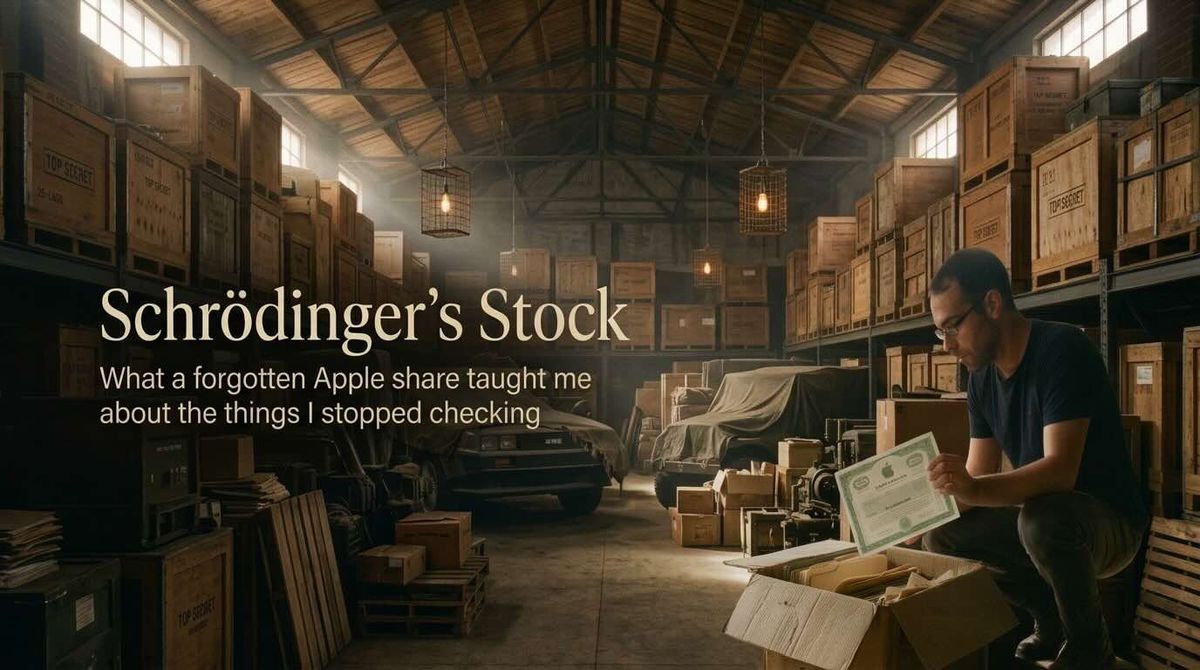
Some career lessons arrive in a performance review. This one started as a throwaway line over lunch and finished at 9pm that night, with me at my laptop, working out exactly what I'd lost.
A while back I had lunch with one of my oldest mates. We got talking about the stock market and the handful of companies that have gone absolutely vertical. Naturally Apple came up, and my brain handed me a file I hadn't asked for and didn't know it still had. I own one of those. I bought a share. Back in my twenties.
I hadn't thought about it in close to 15 years. Not once. And it wasn't some noble detachment from money. I was just busy. New roles, new teams, a few house moves, a pandemic, year after year. That's how forgetting actually works. You don't decide to let something go. It just never makes the cut against whatever's on fire this week, and then it doesn't make the cut the week after that, until eventually it stops coming to mind at all. Something you never think about is, functionally, something you no longer own.
So, for the record. In 2005ish I bought one share of Apple stock, from a site called OneShare.com, purely because I'm an enormous nerd and I thought it would be fun to own a piece of the company that made the things I loved.
They posted me a paper certificate. My name printed on the front, issued by Apple Computer, Inc. The plan involved a frame and a wall. I was going to hang it in whatever office I ended up with and gesture at it like a low-rent Montgomery Burns.
I never got around to buying the frame. I never got around to any of it. The certificate went into a box, the box went out to my mother's garage, and there it sat.
The evening I was rich
My friend did what everyone does now. He pulled out his phone, asked an AI to work out the splits and the dividends, and slid the number across the table.
Eighteen thousand US dollars.
I laughed. Then I stopped laughing. Eighteen thousand dollars had been quietly compounding in a box in my mum's garage while I got on with my life. For years. I hadn't done anything clever. I hadn't done anything at all. That is sort of the point.
That night I sat down to work out how you turn an old piece of paper into actual money, and went down a massive rabbit hole. Old files, old correspondence, old envelopes.
I found two things down there.
The first was that the eighteen thousand was wrong. Apple split two-for-one that February. My certificate is dated April. I bought it two months after the split, so that split isn't mine. One share becomes 28 today, not 56. The real number was somewhere north of nine thousand. Still a lovely return on seventy bucks. Just half the fantasy I'd been carrying since lunch.
The second was worse. The holding had already been declared abandoned, handed to the State of California under its unclaimed property law, and sold. Not sold now. Sold at some point I wasn't told about.
So I don't get the shares, and I don't get today's price. I get whatever they sold for. The California State Controller runs the unclaimed property program, and by law the Controller's office can't buy the shares back or make up the difference when the price has moved. The whole thing comes to roughly the price of a nice dinner. There's a claim form I can fill in. It won't change my week.
So for one evening I had eighteen thousand dollars. Except I didn't, because it was really nine. And I didn't have that either, because it had stopped being mine years before.
Schrödinger's stock: a fortune and nothing at all, right up until I opened the box.
The part that actually stings
It isn't the money (I mean, it is.. but isn't..). It's how reasonable I was the whole way through.
Apple started paying a dividend again, and a notice arrived every quarter after that. I read the first few properly. Then I clocked that they were all the same, because they were, and I stopped reading them. Into a drawer then a box in a garage. The dividend on one share was a few dollars and banking an international cheque from Australia cost about twenty, so every quarter the arithmetic said don't bother, and every quarter I told myself I'd sort it out properly at some distant point in the future.
Then the letters stopped.
And I felt nothing about that at all. Not relief, not suspicion, nothing. There was no moment when the letters stopped, because stopping isn't a moment. It's a run of ordinary days where nothing arrives. I got on with my life.
Every letter that ever arrived was routine. The only one that mattered was the one that never came, and nothing ever turns up to tell you that something has stopped turning up.
Here's what I didn't know. Under California law, an uncashed dividend isn't just an uncashed dividend. Three years with no claimed payment and no contact from the shareholder, and the state concludes the owner has vanished. The dividends go, and the entire holding goes with them. Those cheques weren't small payments I was declining. They were a heartbeat. Cashing one, or even just writing in to change my address, would have reset the clock.
I lost nine thousand dollars because it wasn't worth twenty to collect three, and then because it never crossed my mind again.
This is how people, teams and whole businesses go sideways
Look at what I actually did with that share. I stopped reading the notices because they were always the same. I kept putting off dealing with it because dealing with it cost more than ignoring it. And when the letters stopped, I didn't notice. Not that year, not the next one, not ever. I've done all three of those at work too, and so has every leader I know. It happens to individuals, to teams, and to whole companies, and it looks the same every time.
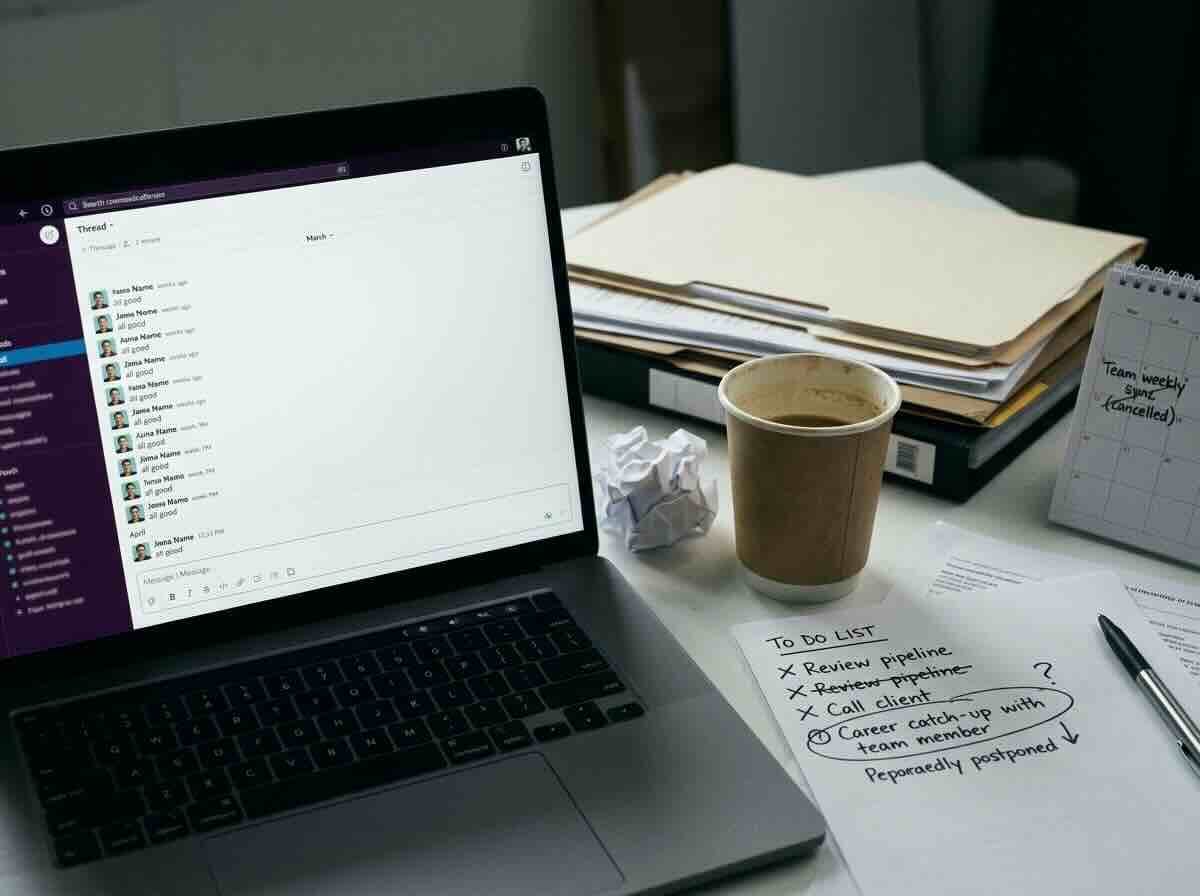
One person. Their weekly update has said "all good" since March. You read it every week, but you stopped actually reading it in April, because it never changes. The career conversation you owe them keeps sliding, because having it this week costs an hour you don't have and not having it costs nothing this week. And they've stopped pushing back in meetings, which felt like things settling down. Then they book a quiet fifteen minutes to tell you they've accepted a new role somewhere else.
A team. The weekly meeting stops surfacing problems, so you let it get shorter. The conversation about how people actually work together keeps sliding, because there's always something more urgent. Nobody complains, which reads as a team that has finally hit its stride. Then two people resign in the same month, and the exit interviews are full of things everyone else already knew.
A business. Support tickets drop off, and you take it as a product that finally works. Really, customers have stopped expecting you to fix things, so they stopped asking. The account looks healthy, so the renewal conversation slides. Then it doesn't renew, and the reason turns out to be something small from months earlier that nobody escalated.
There's nothing dramatic in any of this. Nobody makes a bad call. The warning sign is always something that stops happening, and those are the only warnings that never reach you.
I've coached a lot of leaders from other countries on exactly this, usually after they've landed in Australia and been warned that the team are whingers. They hear the complaining and read it as negativity, or as a culture problem to manage down. It's the opposite. A whinge means someone still thinks the thing is worth fixing, and that they trust you enough to say so out loud. It's engagement with a grumpy face on.
So the moment to worry isn't when your team are giving you grief about the process. It's the week they stop.
Researchers call it acquiescent silence. People stop raising things once they've decided that raising things doesn't work. Which means a quiet team isn't telling you about the team. It's telling you about you.
Nobody took that share off me either. I let it go, very reasonably, one quarter at a time, and never noticed the moment it stopped being mine.
How to start
Four questions. Twenty minutes. The hard part isn't the time, it's being willing to dislike the answers.
- Who has gone quiet? Not the person struggling loudly. They're fine, they're talking. The one who used to bring you problems and doesn't anymore. Ask them today, and ask twice, because the first answer is always "yeah, all good".
- What keeps getting moved? Open your calendar and find the meeting you've rescheduled three times. Your gut flagged that one as important. Your week keeps overruling your gut. Do it this week, or take it off the list and admit you're not going to.
- What have you stopped actually reading? The update, the dashboard, the report you skim because it never changes. Read the most recent one line by line. You've been reading your memory of it.
- And you? Who used to check in on you and hasn't for a long time? You're a holding as well, and nobody sends a notice when yours goes dormant.
Do it today. Later is the entire subject of this article.
The bit I'm keeping
The money is long gone. There's a claim form buried under some paperwork on my desk, and I'm not sure I'll ever get around to filling that in either, which is probably the most honest sentence in this article.
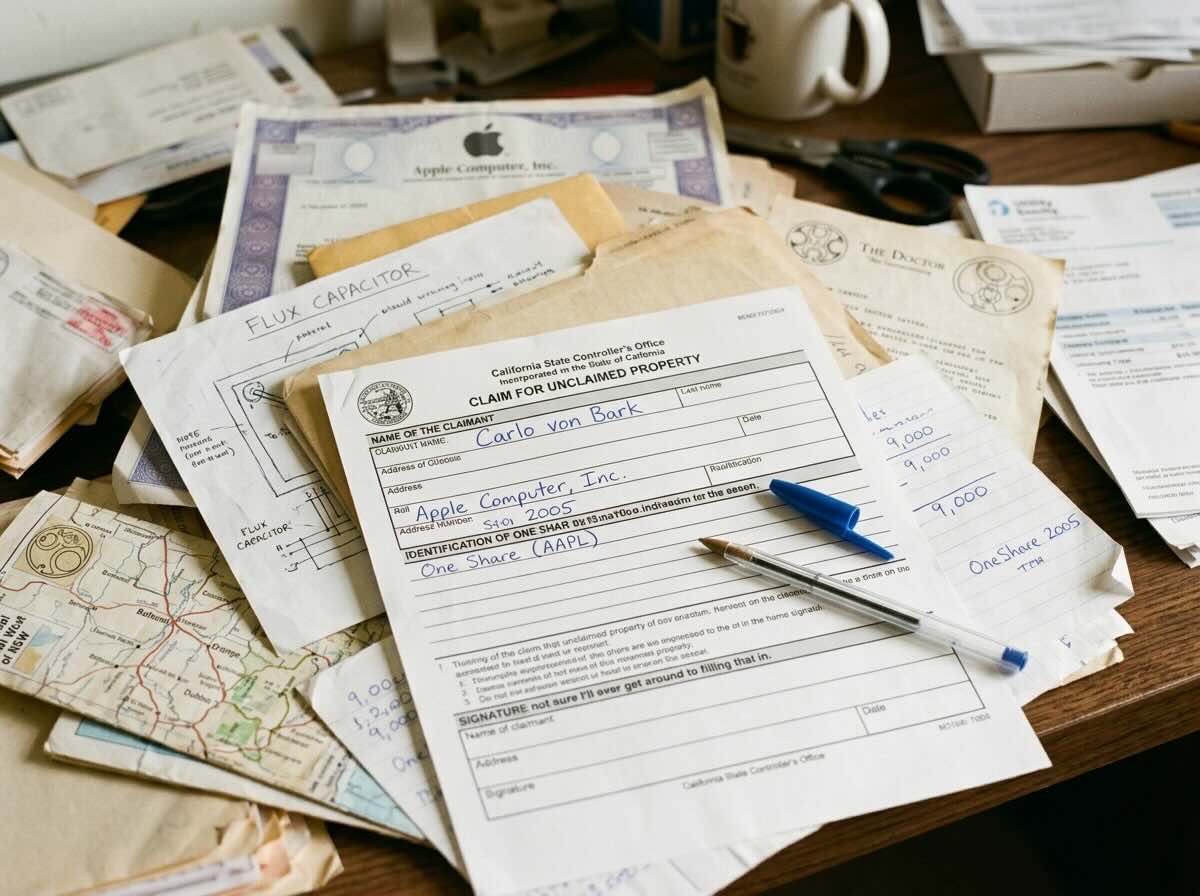
But the seventy dollars already bought me something better than either figure. It bought me a very funny, very expensive reminder that the decision that costs you is rarely the reckless one. It's the one that looks obviously right at the time, made over and over, followed by a silence you never think to question.
Go and open the box. Whatever's in there, you'd rather know now than years from now.
Let's keep the conversation going
What's in your box in the garage? What's the thing you haven't checked in far too long, at work or otherwise?
Hit reply and tell me. I'd love to hear it, especially if yours has a happier ending than mine.
And if this resonated, send it to someone who has a drawer they've stopped opening.